Case Study · 2026–Present
Toko Oleh-Oleh
Offline-first retail POS and business assistant designed for real-world souvenir shop constraints.
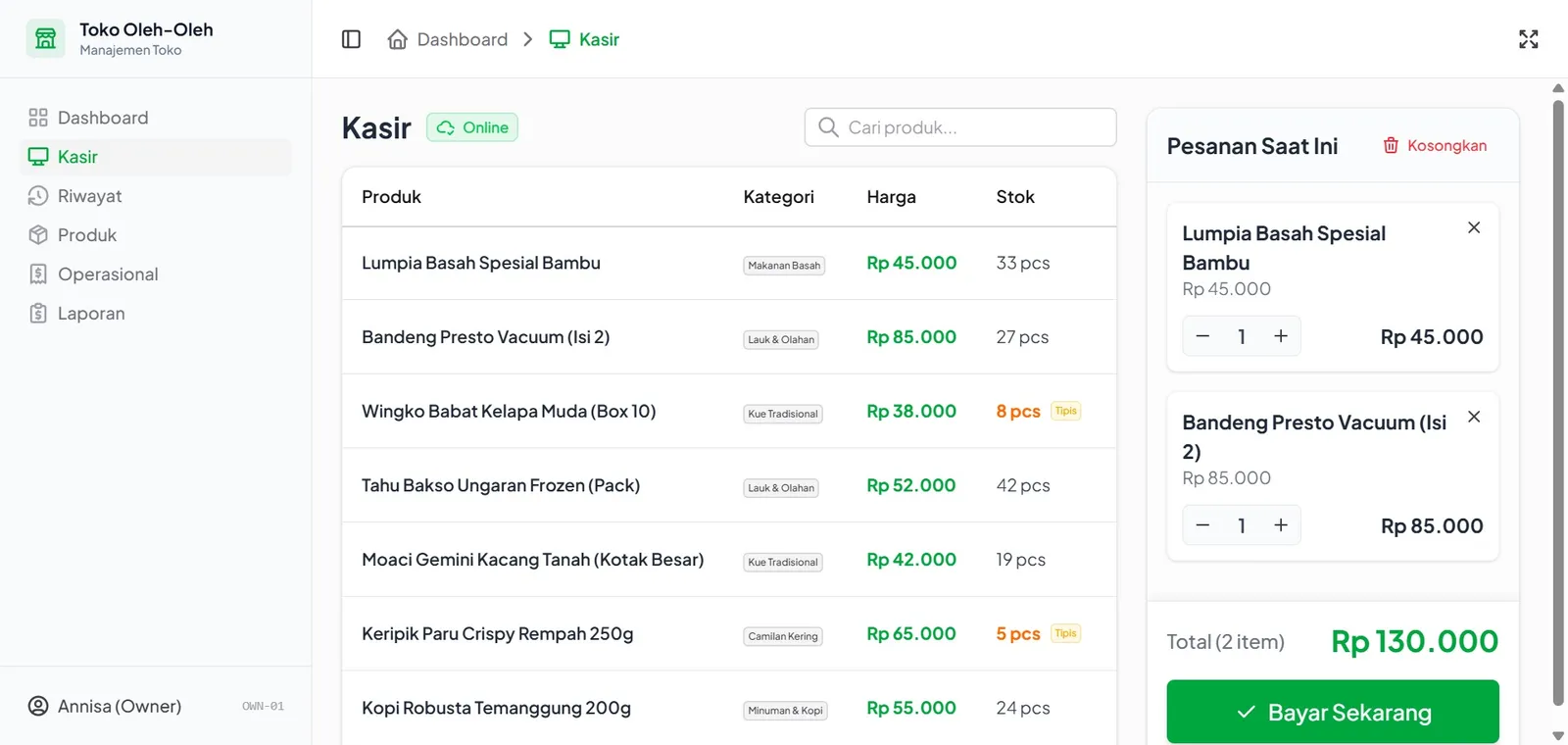
Designing for Real-World Shop Constraints
Toko Oleh-Oleh started as a solo product built in Nuxt 4 and Vue 3 to solve the everyday headaches of running a regional souvenir shop. Instead of building a generic cashier app, I mapped out ten real operational problems first: unstable Wi-Fi during peak tourist rushes, supplier prices that change every week, personal and business money sitting in the same bank account, wholesale orders with custom pricing, and a busy second branch run by a senior staff member who cannot read or type and only accepts QRIS payments.
Keeping the Cashier Running Offline
During holiday rushes, a dropped internet connection cannot freeze the checkout line. I built the cashier workspace on Dexie.js (IndexedDB) and Pinia so every sale saves locally first, generates a device-stamped receipt code (TRX-YYYYMMDD-{DEVICE}-{RAND}), and prints to 58mm or 80mm thermal printers before syncing to Supabase in the background:
- Never Block a Live Sale: Offline sales across multiple devices are always accepted first. If syncing later reveals that stock went negative, the system flags the item for the owner to review instead of rejecting a customer at the counter.
- Clear Order States & Partial Returns: Every order moves cleanly from cart to pending payment, then either settled or voided before payment. Once paid, receipts are locked against direct edits; any adjustment goes through a full or partial return flow that restores stock at the original purchase cost.
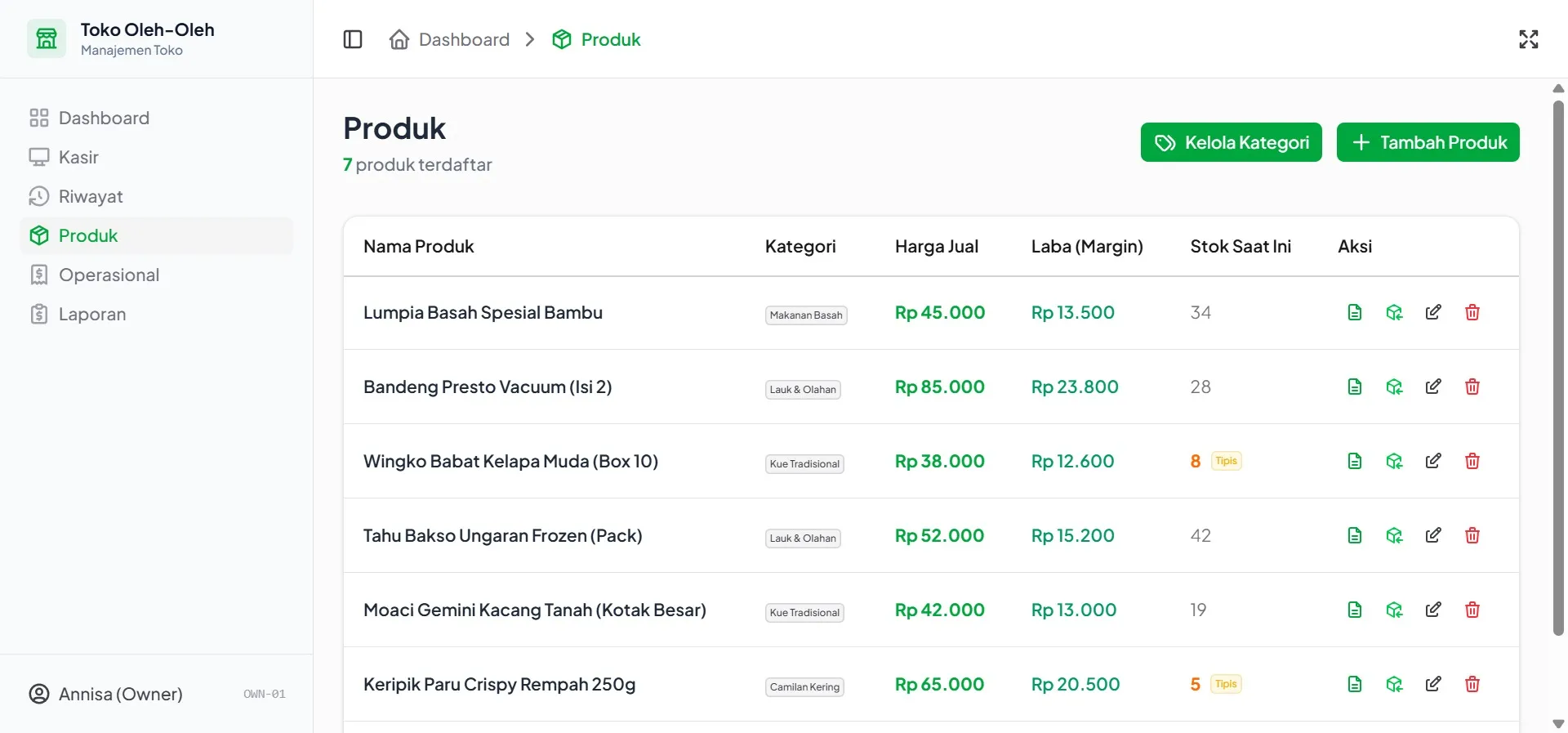
Product management table showing retail selling prices alongside live profit per item (Laba / Margin) calculated from restock costs, plus low-stock warning badges.
Making Profit & Cash Flow Easy to Read
Many small-business owners look at daily sales revenue and assume all of it is profit. To make the shop’s true financial health clear without requiring an accounting background, I designed the backend logic around three everyday questions:
- Automatic Moving-Average Product Cost: Whenever new stock arrives at a different supplier price, logging the batch automatically recalculates the item’s average cost and updates its real profit margin.
- How Much Cash Is Safe to Withdraw: Separates money that must stay in the business from personal drawings by subtracting average monthly operating costs and upcoming restock needs from the current cash balance, while recording owner withdrawals (
Prive) transparently under expenses. - Tracking a Non-Digital Branch & Smart Alerts: For the second branch where the operator cannot use an app, the system tracks rough margins automatically by matching incoming Midtrans QRIS payments against stock dispatches logged by the owner, requiring zero app input from the branch staff. On top of that, a daily rule check watches for sudden margin drops, low stock, or unusual revenue dips and only calls the Anthropic API to explain possible causes when a real threshold is triggered.
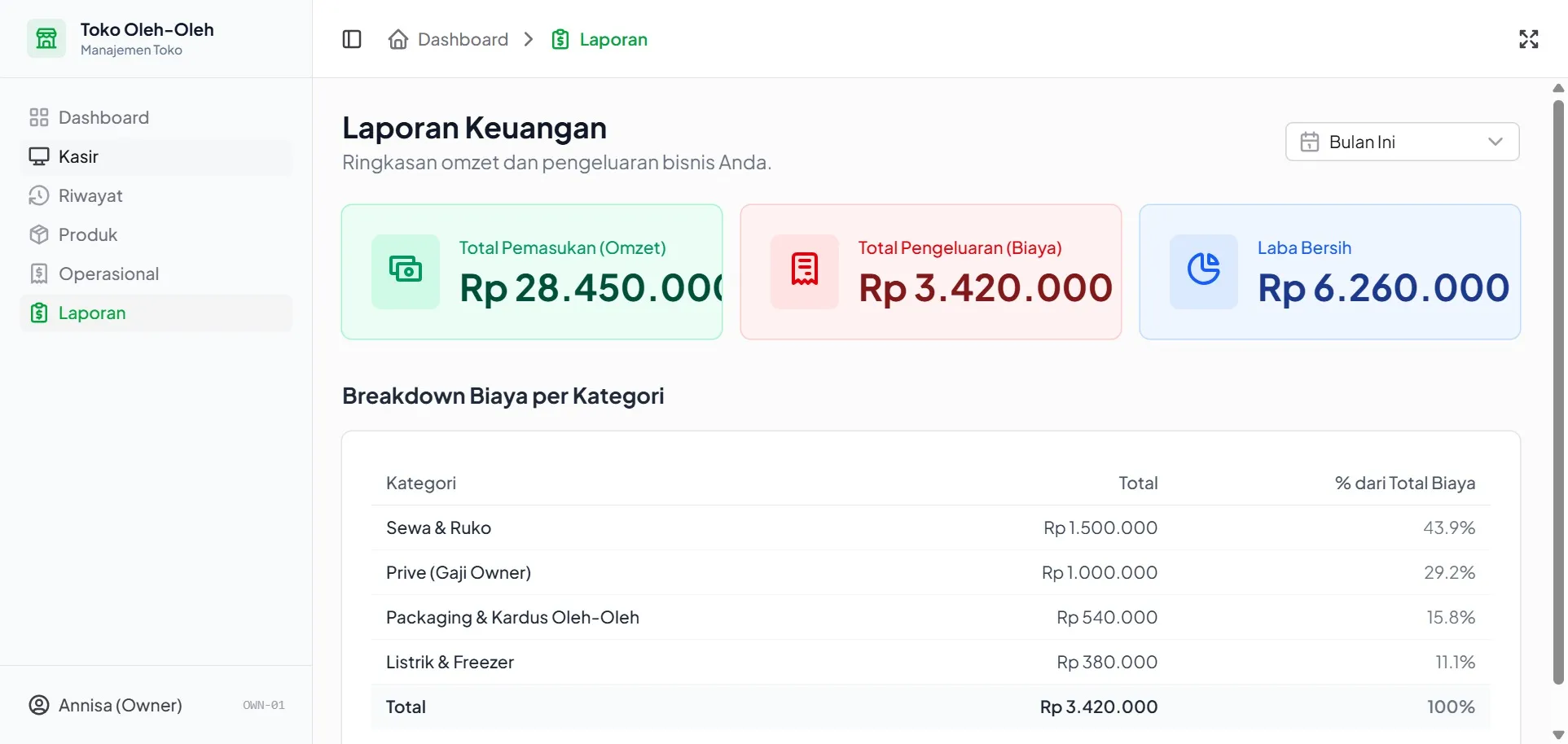
Owner-only financial report protected by Supabase Row-Level Security (RLS) and server-side role checks, breaking down total revenue (Omzet), operating costs (Biaya Operasional), and true net profit (Laba Bersih).