Case Study · 2025
BeeBiuw
AI-assisted early stunting detection and growth companion for mothers, Top 20 National Finalist at GEMASTIK XVIII.
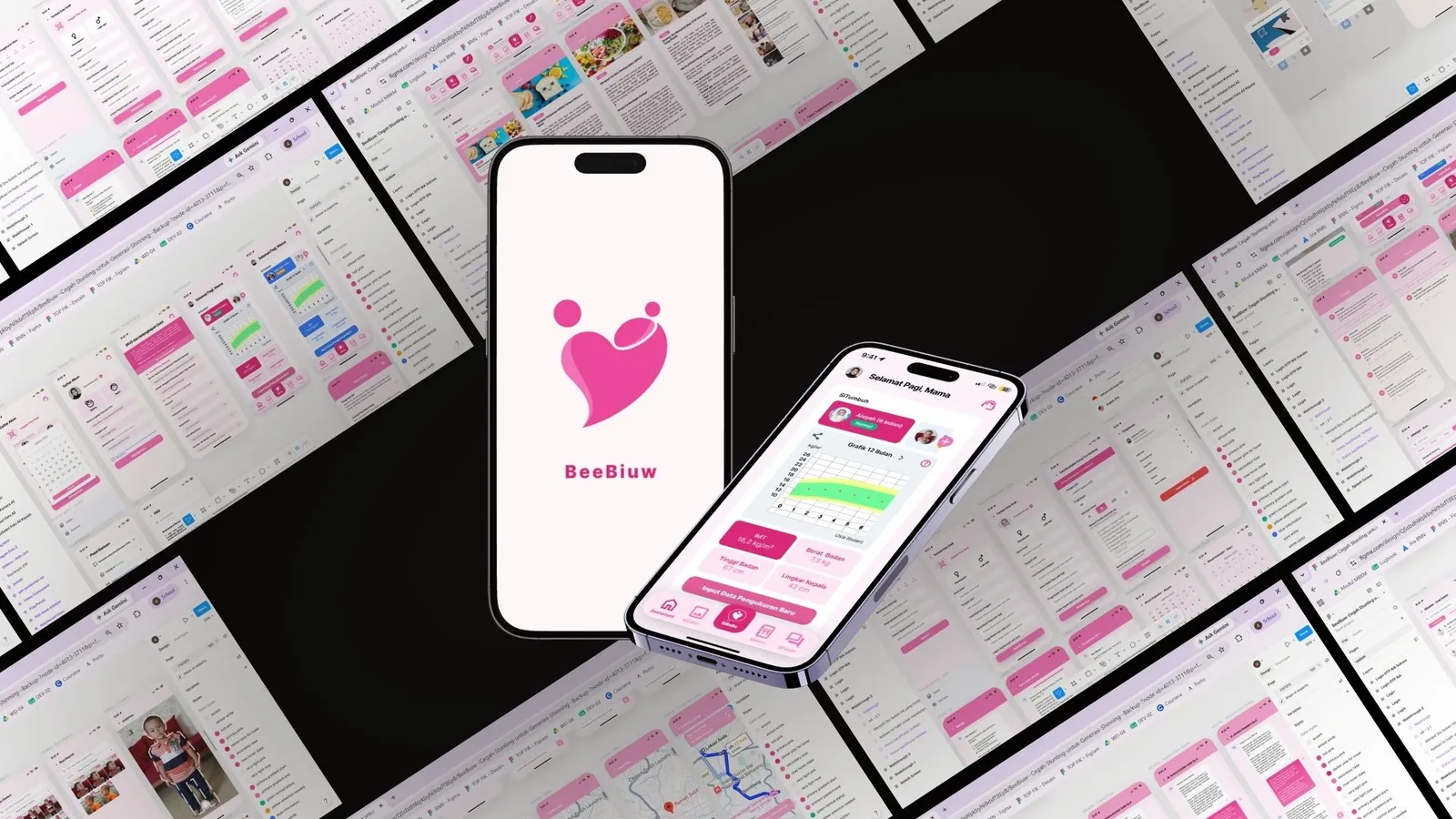
The Context
In 2024, Indonesia’s stunting prevalence stood at 19.8%, well above the WHO’s 14% threshold. Early intervention matters most during a child’s first 1,000 days of life, yet our contextual inquiry uncovered a clear human gap: mothers often struggle to track growth consistently because of daily routines, limited access to measuring tools at home, and intimidating clinical terminology.
Competing in the UI/UX Design division at GEMASTIK XVIII 2025 as Team Leader of DadakGas, we grounded BeeBiuw in a persona of a new mother who wants to care well for her child without feeling overwhelmed by fear or medical jargon. That insight set our core tone: the app should feel like a calm, supportive companion rather than a sterile hospital form.
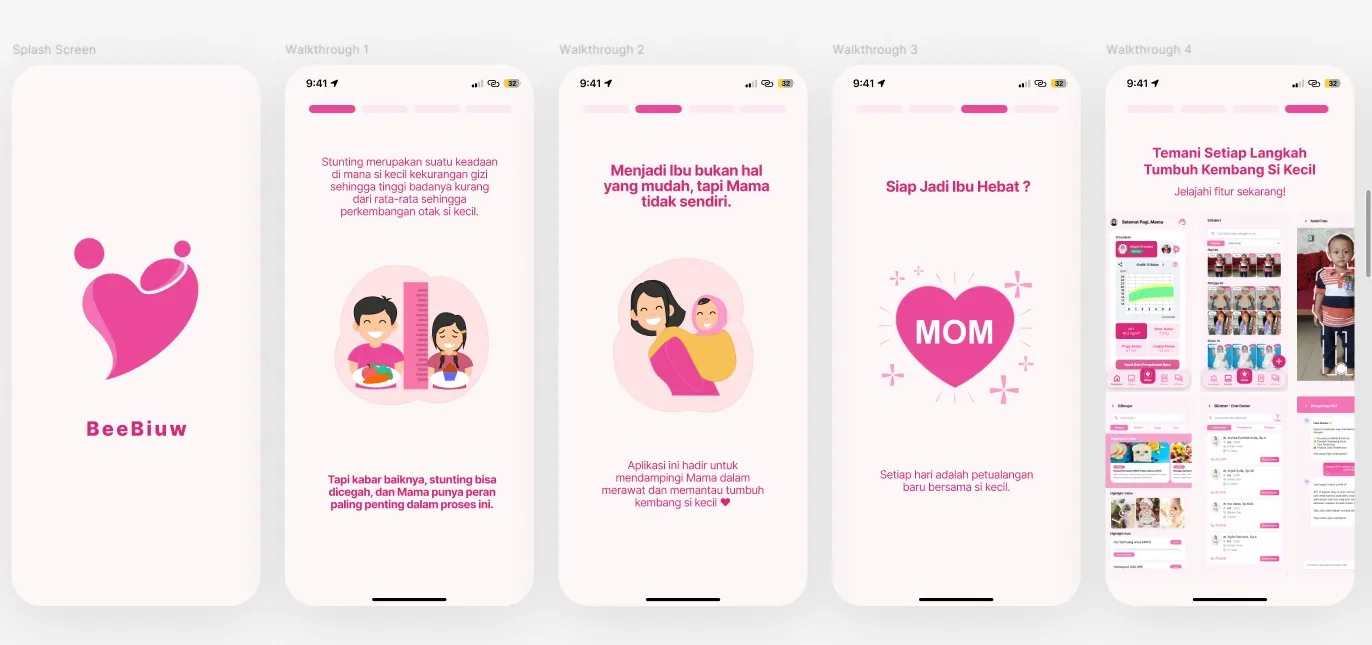
Splash identity and gentle onboarding flow setting a supportive maternal tone before introducing growth tracking and nutrition tools.
Translating Medical Data Into Everyday Clarity
Instead of asking parents to interpret raw anthropometric numbers on their own, we designed SiTumbuh to turn routine measurements into readable WHO Z-score charts with immediate color cues and Body Mass Index (IMT) summaries. You can inspect the complete component library and user flows in our Figma design file.
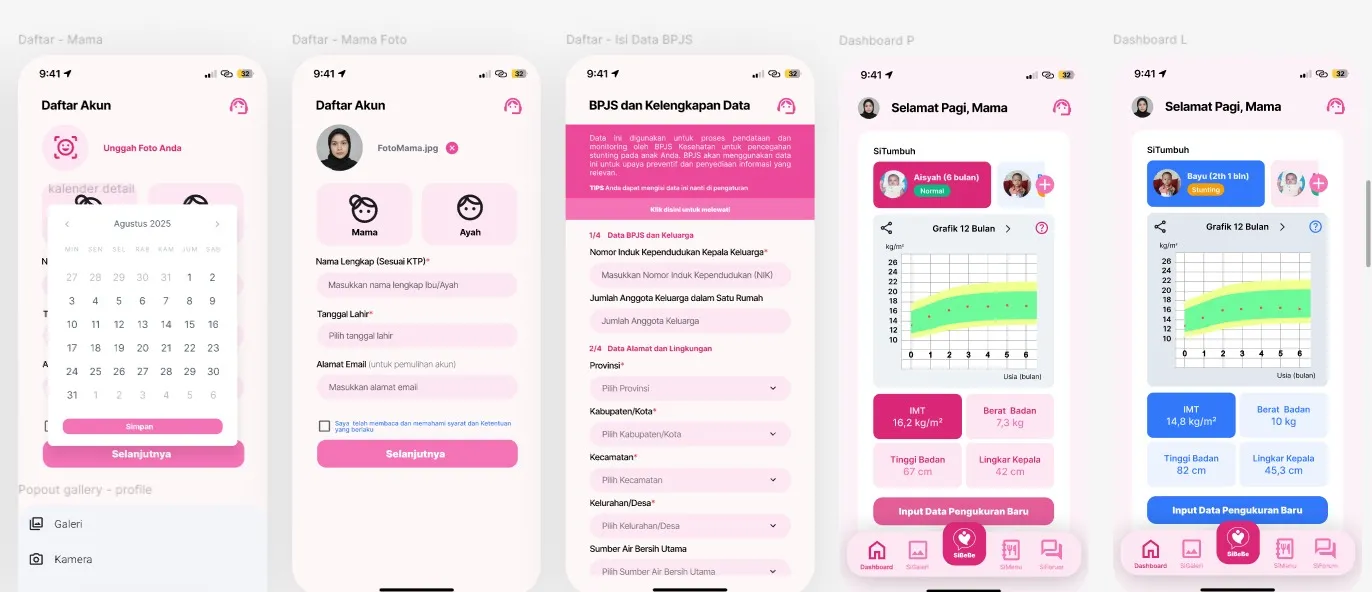
SiTumbuh dashboard translating weight, height, head circumference, and BMI into color-coded WHO Z-score trends that parents can read at a glance.
To lower the barrier for families without measuring tapes at home, we also explored SiPantau (integrated with SiGaleri), a Computer Vision concept that lets parents photograph their child’s body posture to help estimate stunting risk visually, paired with SiBeBe (an NLP-assisted Q&A companion), SiMenu nutrition guides, and SiForum peer support.
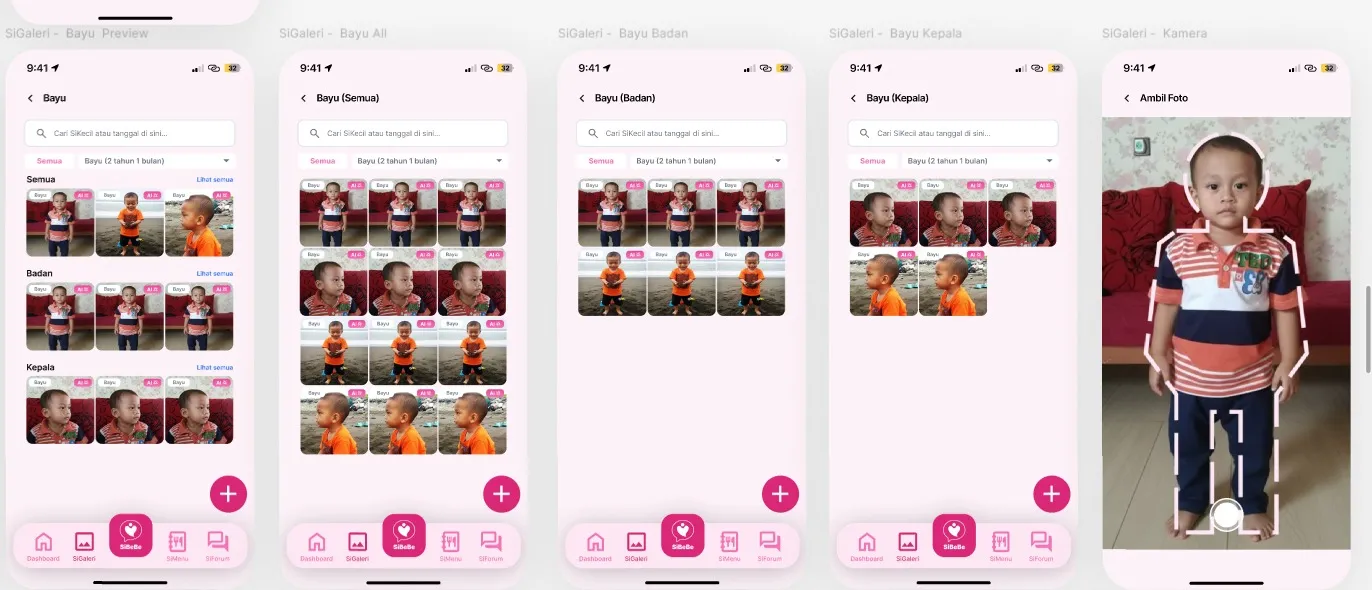
SiPantau computer vision scan concept and photo history gallery designed to support visual monitoring when physical measurement tools are unavailable.
Three Iterations With Doctors & Posyandu Mothers
We ran three full Design Thinking cycles, validating prototypes directly with a medical professional and mothers visiting local health clinics (Posyandu). Each round exposed blind spots we would never have caught from a desk:
- Iteration 1 (Medical review): A doctor highlighted the clinical importance of surfacing Body Mass Index (BMI / IMT) alongside standard height and weight metrics.
- Iteration 2 & 3 (Posyandu testing): Observing mothers directly showed that raw trend lines were not enough. Parents wanted plain-language explanations of what an upward or downward curve meant for their next meal or clinic visit.
Across those three rounds, usability validation improved our System Usability Scale (SUS) score from 79 to 82, and Task Success Rate (TSR) rose from 87% to 88%. The full research methodology and testing data are documented in our competition proposal, academic paper draft, profile video, and exhibition poster.
National Finalist & Intellectual Property
BeeBiuw placed in the Top 20 nationwide in GEMASTIK XVIII’s most competitive UX Design division (Bandung, October 2025). Beyond the finals, our design received official Intellectual Property Rights (HKI Copyright) registration from the Indonesian Ministry of Law (Nomor Pencatatan: 000984933).
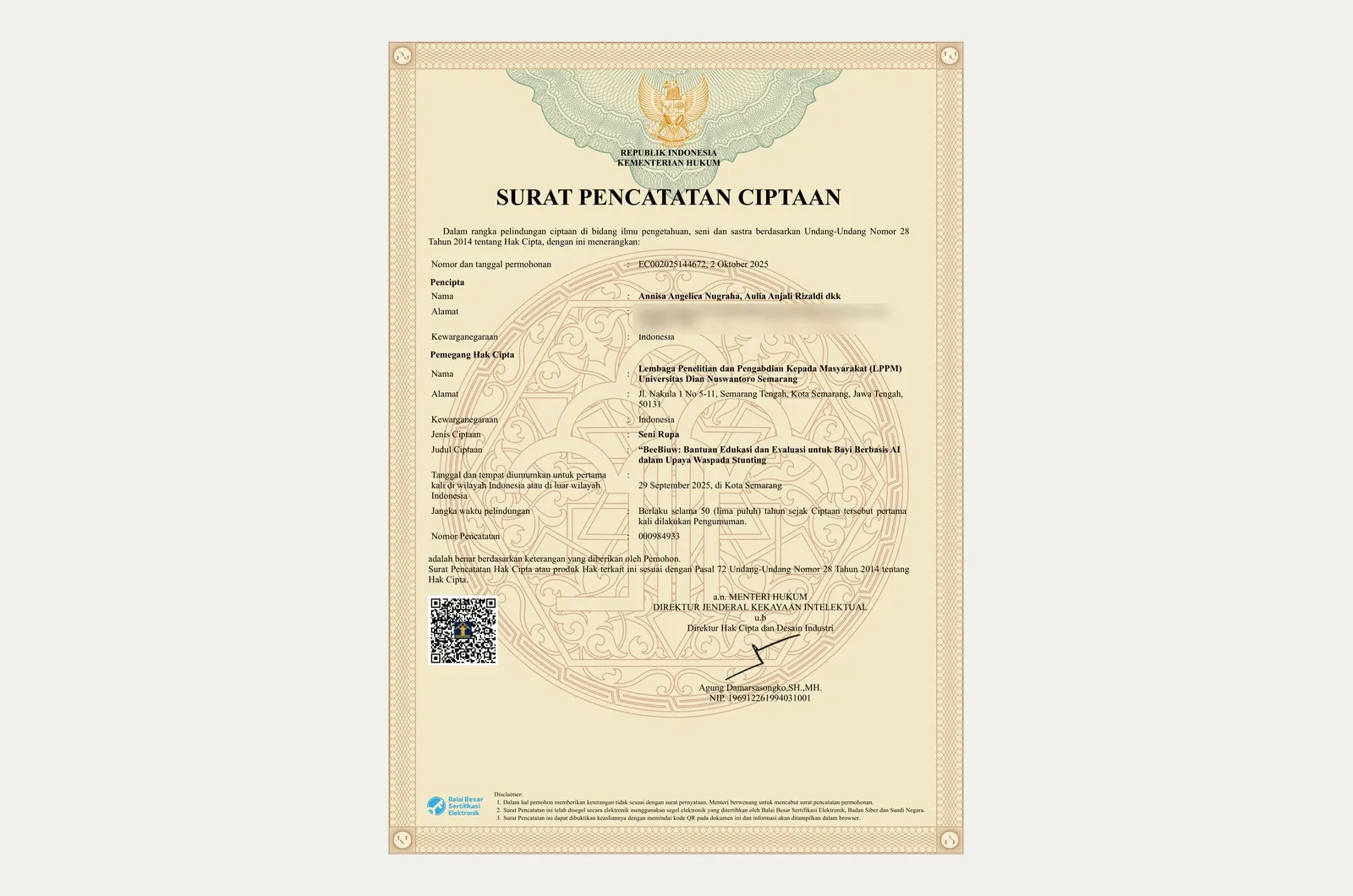
Official HKI Copyright Certificate (EC002025144672 / 000984933) registered under Kemenkumham RI — verify official PDKI record ↗.
Reflection
Leading BeeBiuw end to end taught me that healthcare UX succeeds on empathy and legibility before cleverness. Synthesizing AI concepts, clinical advice, and honest feedback from Posyandu mothers into one warm mobile experience showed how research turns ambitious technology into something families can actually trust.