Case Study · 2025–2026
SIAT BNN Jateng
Digitizing high-stakes legal and medical assessments across six institutional roles for BNN Provinsi Jawa Tengah.
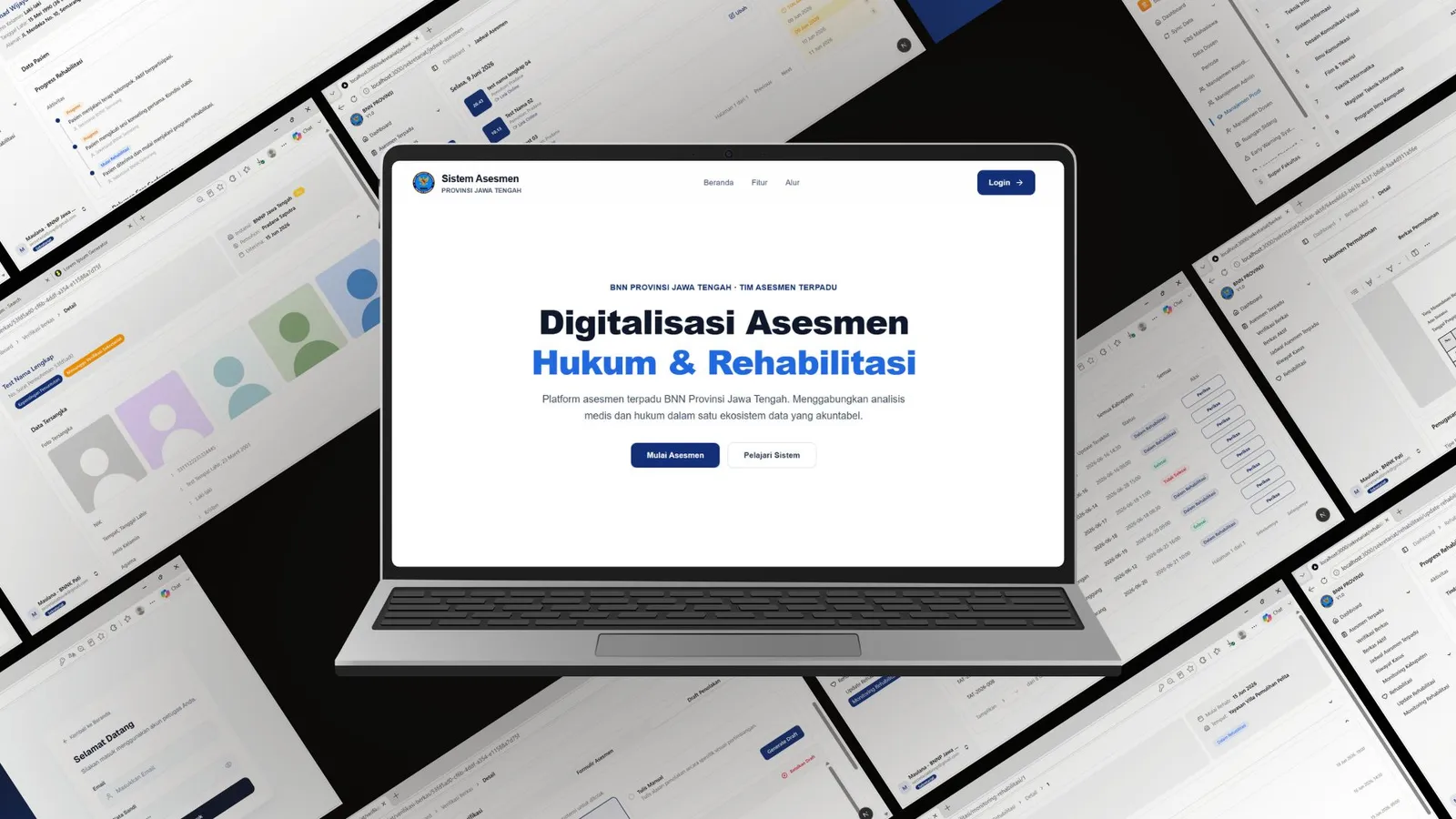
The Context
High-stakes legal and medical assessment decisions at BNN Provinsi Jawa Tengah (National Narcotics Board, Central Java) relied on physical dossiers, thick folders, and wet signatures passing between departments. Files were easy to misplace, checking where an assessment stood across divisions was slow, and the multidisciplinary team of doctors, psychologists, police investigators, and prosecutors had no single system to work from.
Built through a university and government collaboration, SIAT (Sistem Informasi Asesmen Terpadu) brings that entire workflow into one role-based web platform, from initial application and document verification through medical and legal assessment, Case Conference, rehabilitation recommendation signing, and ongoing patient tracking.
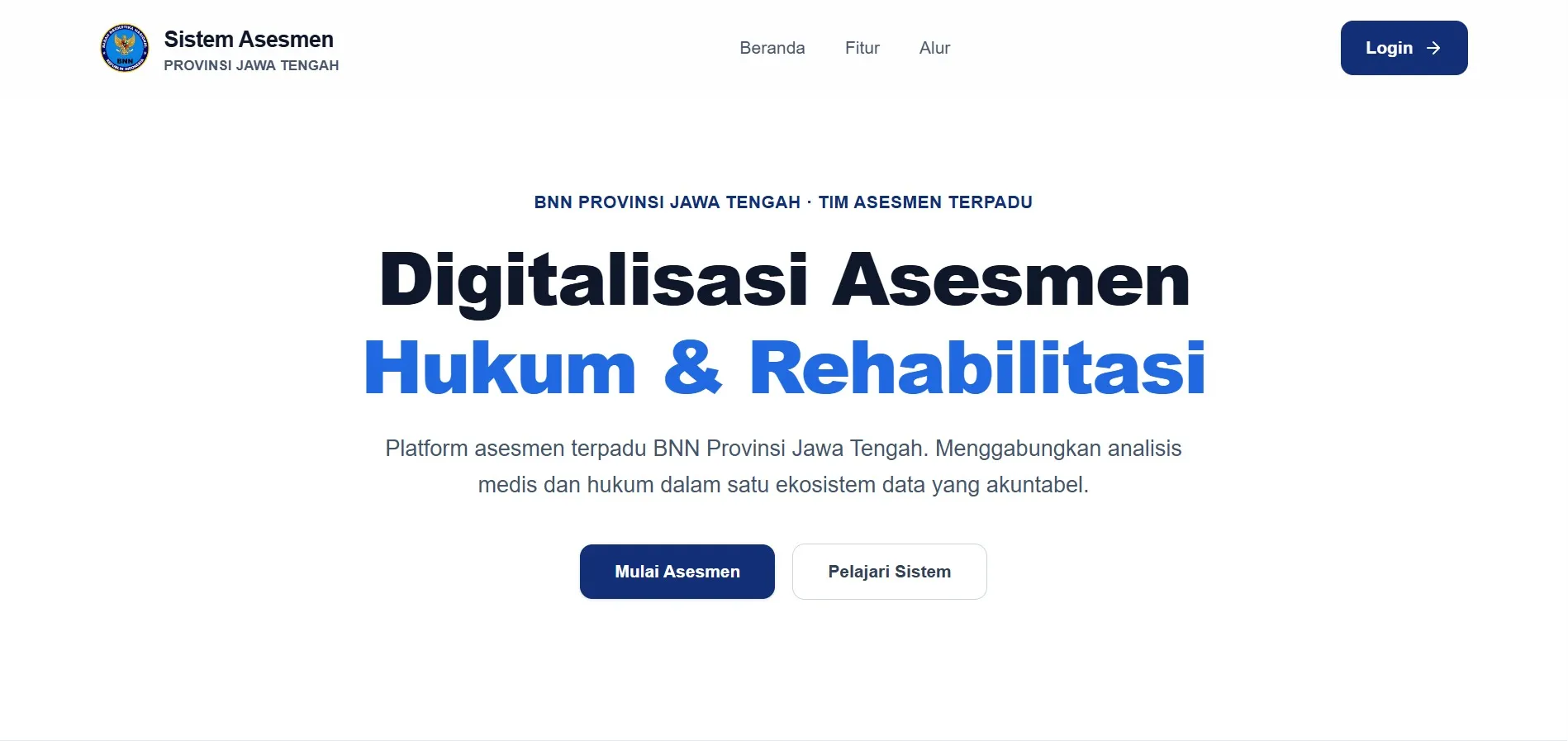
Public entry landing page for SIAT BNN Provinsi Jawa Tengah, presenting clear navigation to system overview, assessment workflow, and role-based officer sign-in.
“For stakeholders used to physical folders and wet signatures, a trendy interface is the wrong goal. The screen has to feel familiar, calm, and trustworthy on day one.”
Scoping Inside Government Constraints
Before opening Figma, I spent weeks in scoping sessions with BNN representatives dissecting physical assessment forms line by line. That meant learning unfamiliar medical terminology, legal clauses tied to government regulations, and internal institutional jargon on the fly.
Scoping discussions naturally tended to branch into adjacent workflows and edge cases. Part of the design work was helping pull conversations back to what was actionable for the current phase while adapting constructively to slower, formal government review cycles.
Six Roles, One Shared Source of Truth
Moving from low-fidelity paper sketches to a validated high-fidelity Figma prototype required mapping strict role-based visibility across six distinct user types: Super Admin, Sekretariat, Pemohon, Tim Hukum, Tim Medis, and Ketua TAT. A doctor and a prosecutor operate on the same case, yet each may only view and act on the records permitted by their legal mandate.
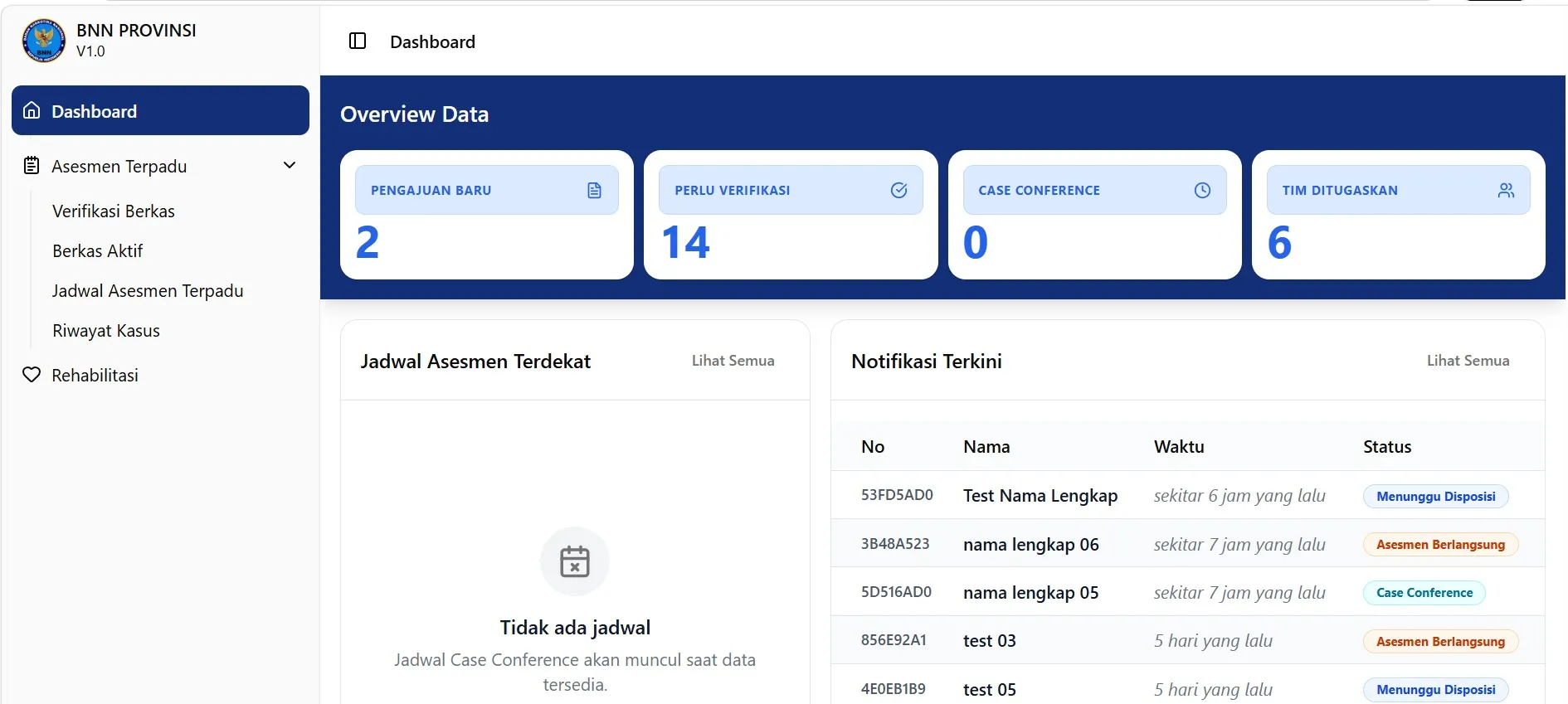
Secretariat overview dashboard surfacing incoming submissions, verification queues, and live status changes in one view. All screens shown use sample testing data to respect government confidentiality.
With the six modules divided across the frontend team during implementation, I owned the complete UI/UX system across all six roles so navigation patterns, table density, and approval feedback stayed consistent regardless of who built each route.
Automating Paperwork Without Losing Trust
The physical forms we digitized carried multi-step approval chains and conditional fields whose requirements changed depending on each assessment outcome. Rather than hiding familiar institutional artifacts behind abstract dashboards, we preserved clear document previews and automated official outputs such as the Formulir Registrasi Klien TAT with electronic signature blocks and explicit audit trails.
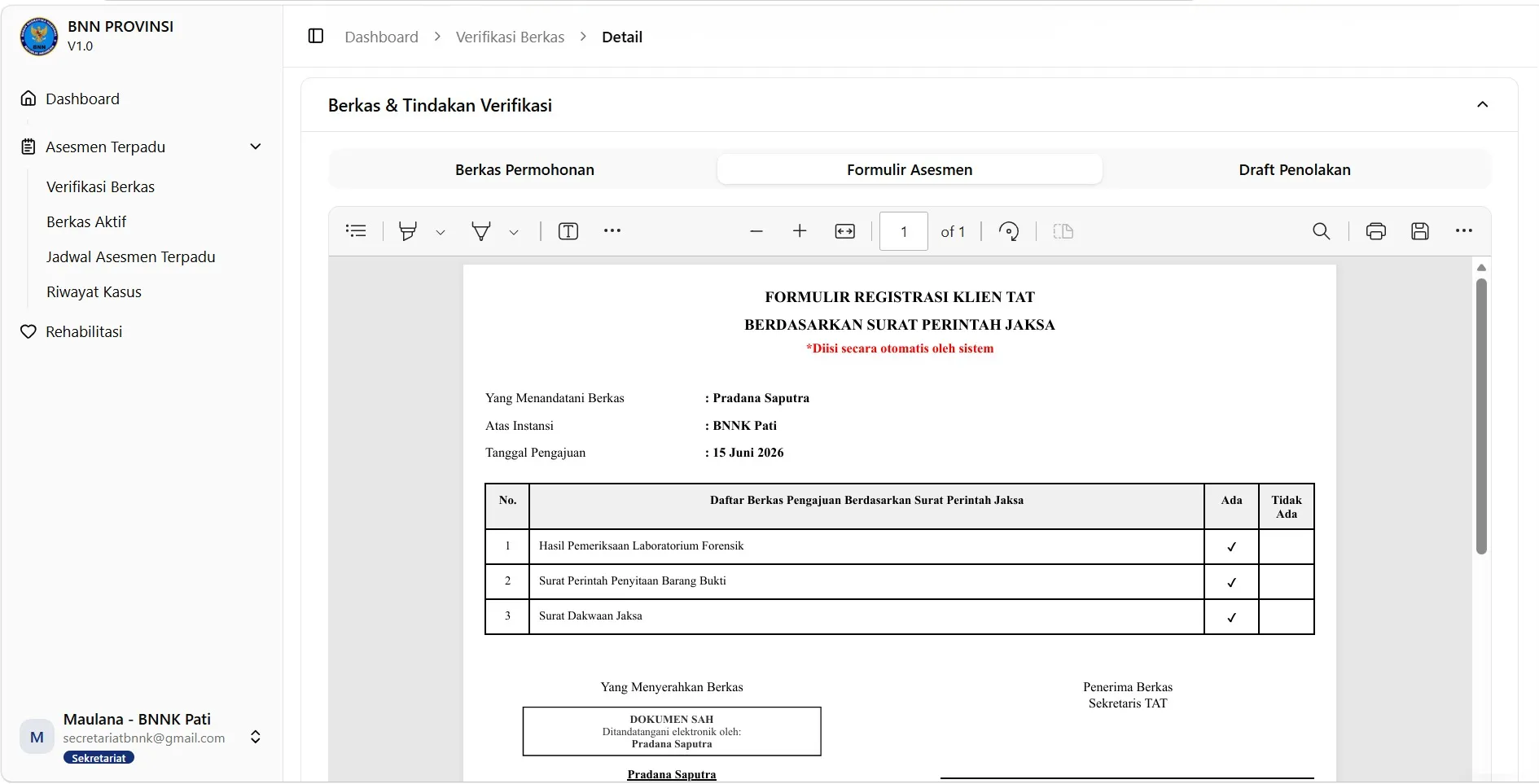
Verification workspace pairing tabbed checklists with an auto-generated official TAT registration form, bridging familiar paper formats with verifiable digital records.
Building for Longevity
On the engineering side, I implemented the frontend for the Ketua TAT, Tim Hukum, and Tim Medis modules using Next.js, React, TypeScript, Tailwind CSS, shadcn/ui, TanStack Query, Zustand, React Hook Form, and Zod. Every form validation rule and state transition had to match governmental compliance requirements while remaining clean enough for teammates and future maintainers to extend.
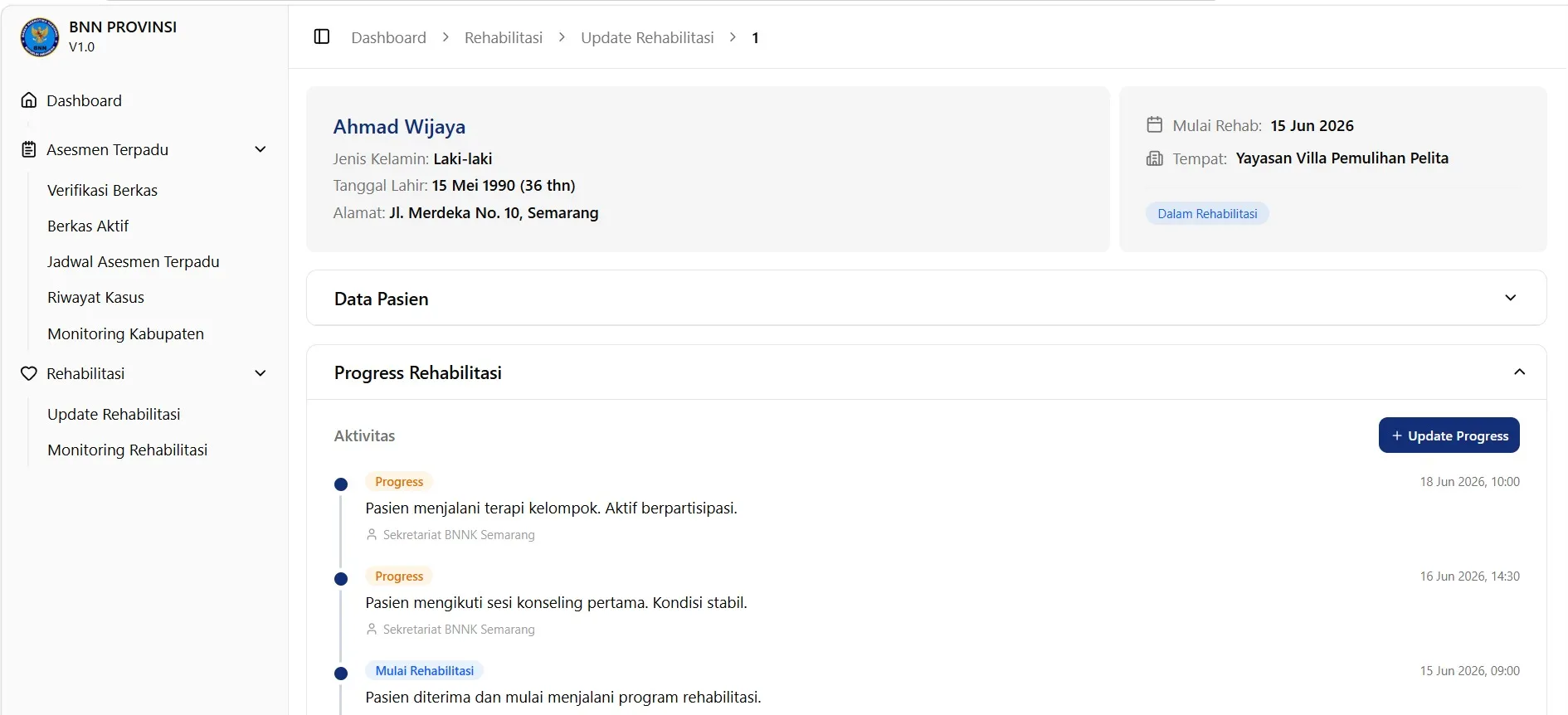
Post-assessment rehabilitation monitoring view tracking patient placement and chronological therapy milestones after a Case Conference recommendation is approved.
Reflection
Working inside a multi-stakeholder public-sector project reshaped how I define finished work. Testing with real officials surfaced edge cases in approval chains and form structure that only appear under real administrative pressure, reinforcing that a system is only done when the people relying on it every day feel supported by it.