Case Study · 2025
EcoPOS
Multi-tenant Point of Sale and outlet operations web platform built with Next.js 15 and TypeScript.
The Context
Built within a cross-platform engineering team spanning backend, web frontend, and mobile development, EcoPOS is a multi-outlet Point of Sale (POS) and store operations platform. Each branch operates inside its own isolated workspace so cashiers and store managers can manage daily sales, open bills, inventory, and reports across web and mobile from one shared backend.
What I Built on the Frontend
As a web Frontend Developer working with Next.js 15, React 19, TypeScript, Tailwind CSS v4, Radix UI, TanStack Table, React Hook Form, and Zod, I built core store workflows across the web dashboard:
- Dashboard & Daily Sales Summary: Branch-specific daily revenue cards, transaction counts, and a best-selling products table tied to the active outlet.
- POS Cashier & Open Bills: Split-screen cashier view combining category-filtered product browsing with live totals, tax calculation, vouchers, payment methods, and saved open bills that can be reopened and updated before checkout.
- Inventory & Store Operations: Create, edit, and listing tables for products, categories, vouchers, payment methods, sales history, and outlet settings.
- Login & Role Access Control: Form-validated sign-in, automatic session-expiration handling with clear toast notifications, and user, role, and permission management screens.
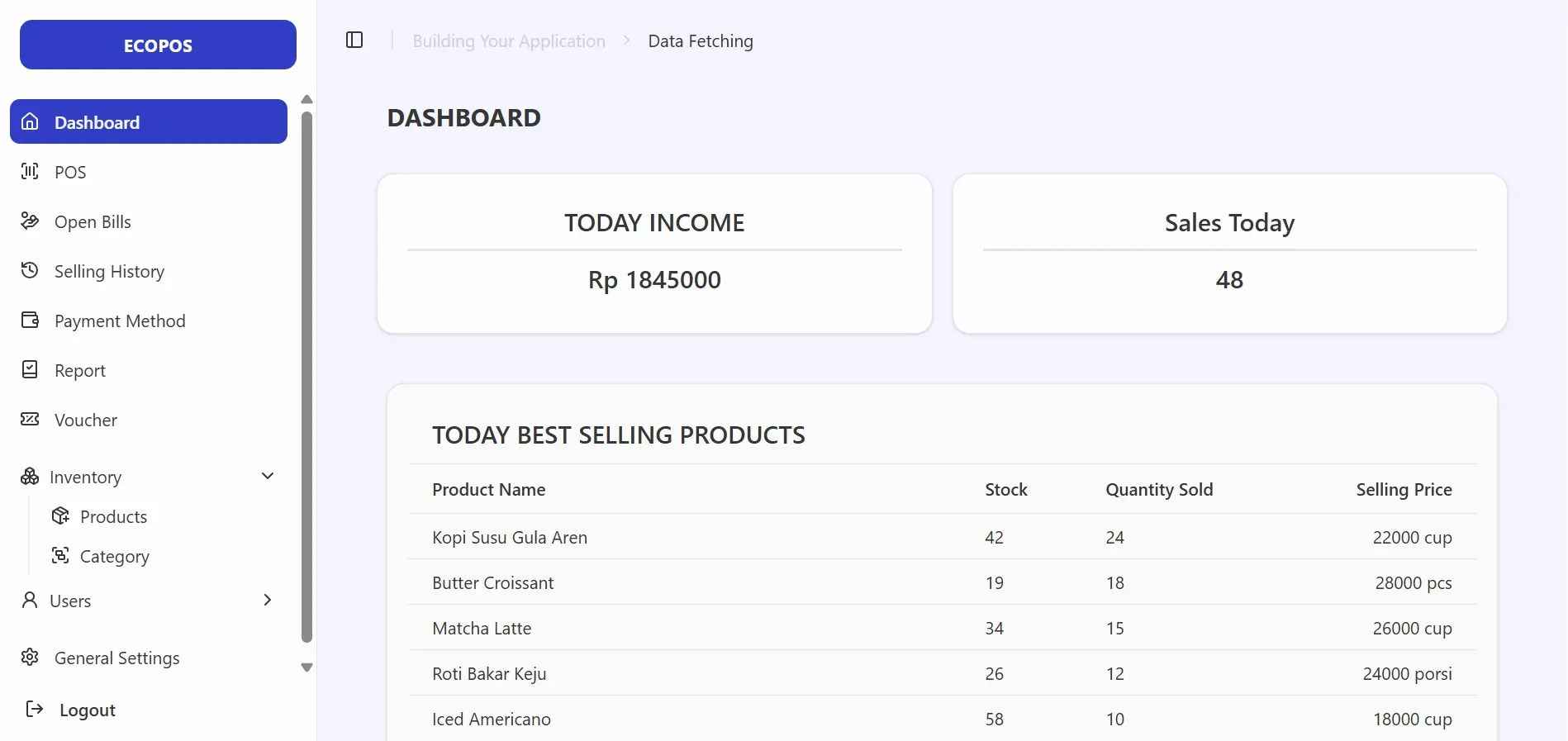
Outlet dashboard showing daily revenue, transaction count, and top-selling items alongside the collapsible navigation sidebar (rendered with sample café data).
Reflection
Shipping a multi-outlet web app in sync with backend and mobile teammates built habits I still rely on: strict form validation with Zod, reusable data tables with TanStack Table, and a clean separation between UI components and API logic.