Case Study · 2026–Present
FTC Apps
Scaling a single-program portal into a multi-tenant academic platform and Astro landing ecosystem.
The Context
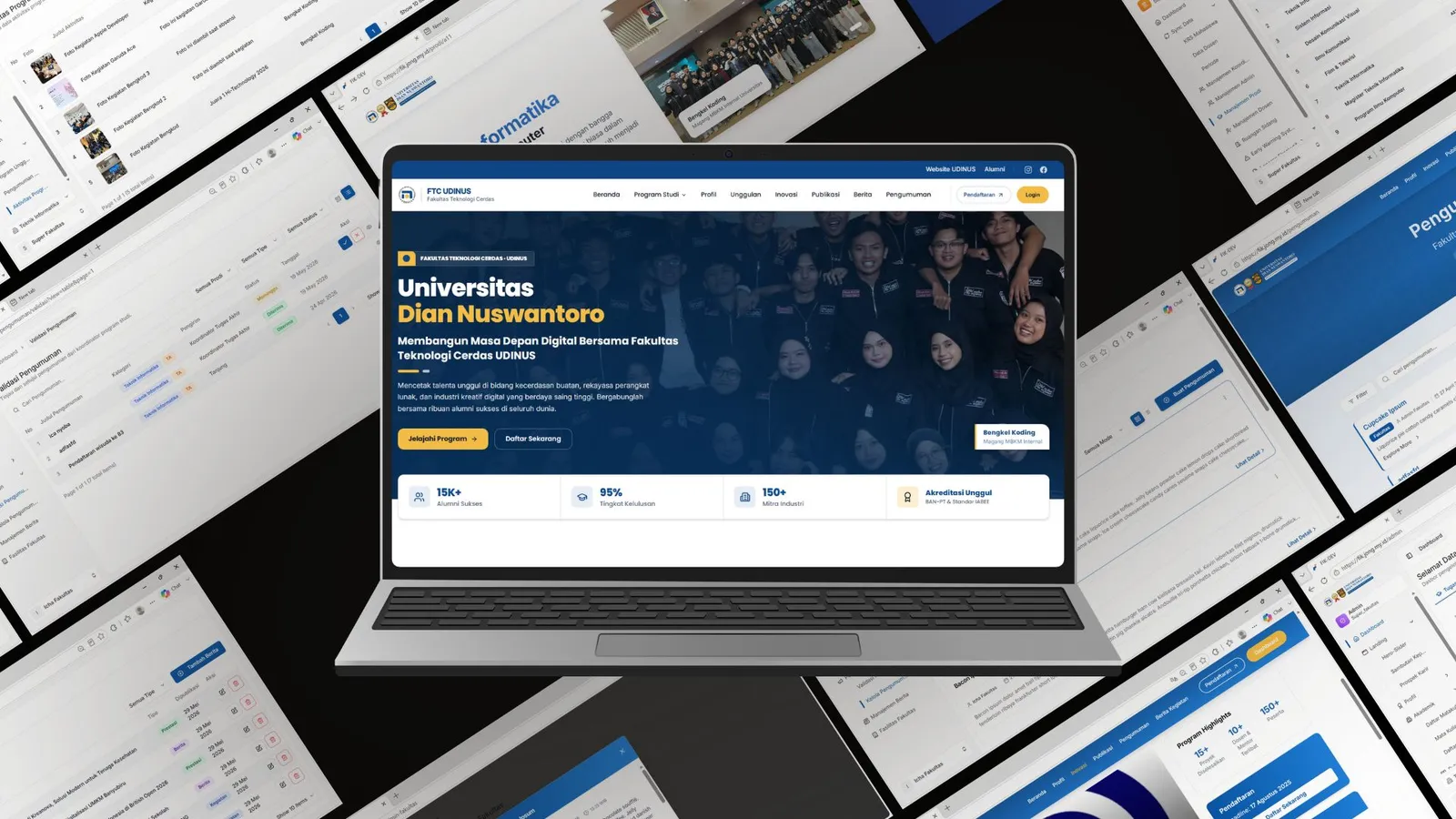
What started as TOP FIK, a single-program portal under the Faculty of Computer Science, needed to grow into FTC Apps, a multi-tenant academic ecosystem serving the restructured Faculty of Intelligent Technology (Fakultas Teknologi Cerdas / FTC) at Universitas Dian Nuswantoro.
Instead of running isolated tools for every department, the platform connects public faculty and study-program websites with internal academic modules behind one role-based entry point: Tugas Akhir, Kerja Praktek, Bimbingan Karir, faculty administration, a configurable multi-tenant CMS, a staff data portal (SID), and a student Early Warning System (EWS).
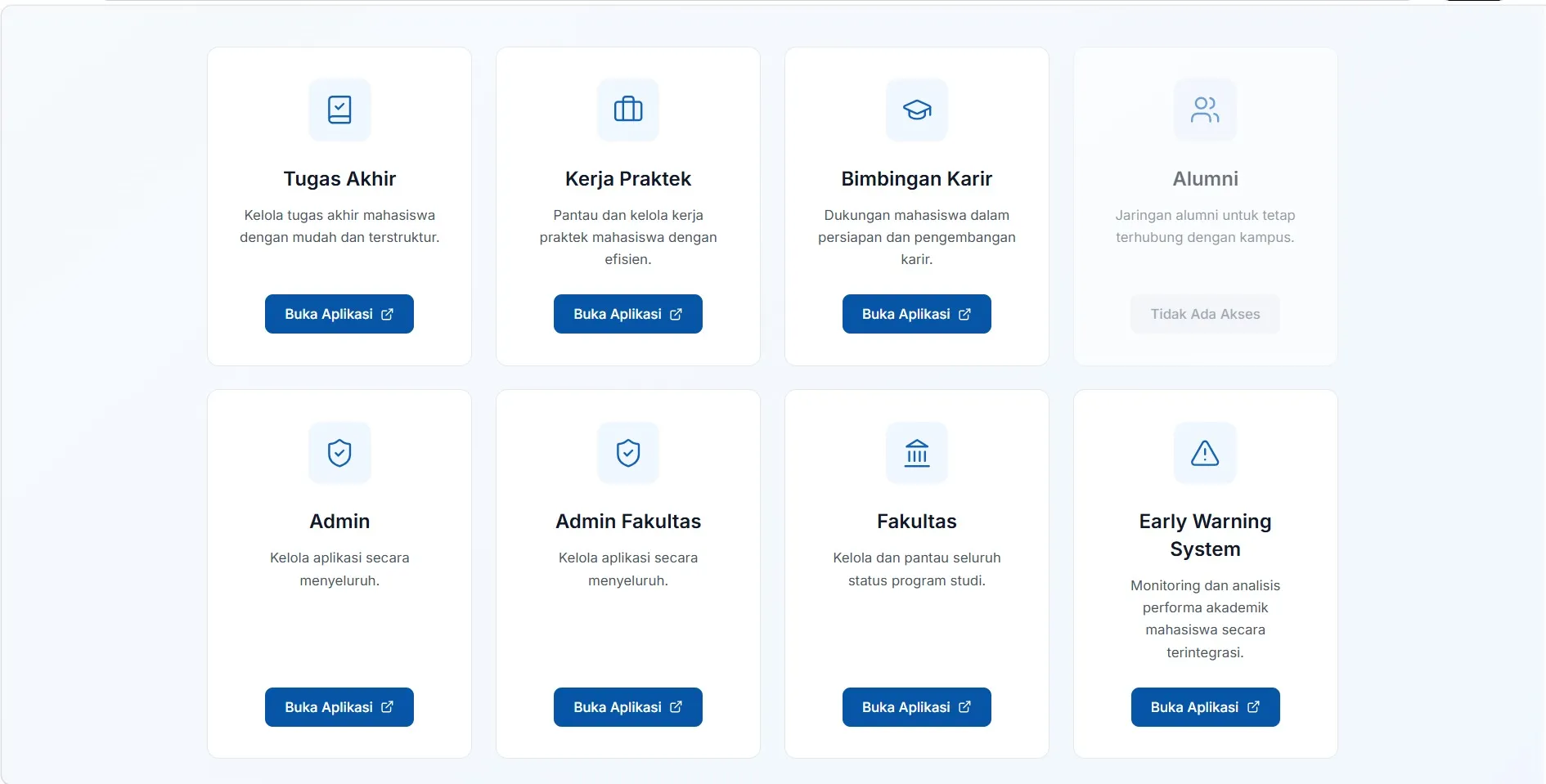
Role-based sub-application hub bringing internal academic modules (Tugas Akhir, Kerja Praktek, Bimbingan Karir, Early Warning System, and faculty administration) into one workspace.
Designing Rules Instead of Pages
Working inside the General track alongside cross-functional sub-teams, I inherited an active codebase built by senior contributors and led the first UI/UX redesign in Figma as the platform scaled from one program to an entire faculty.
The hardest shift was not visual polish, but designing for unpredictability. Every study program could configure its own active modules, approval flows, and brand hex color directly from the CMS.
“The best institutional interfaces are not just polished in an ideal mockup. They stay coherent when non-designer admins take control.”
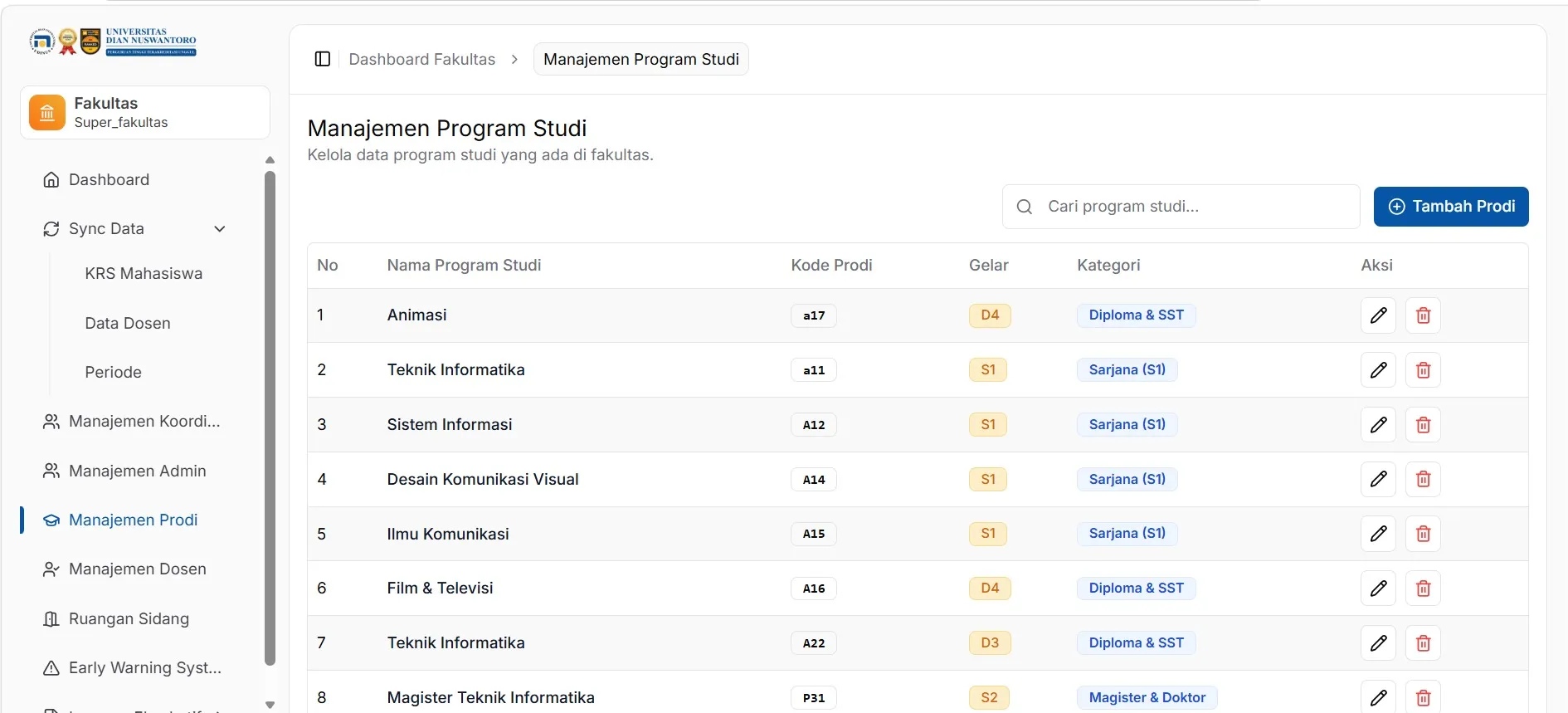
Multi-tenant CMS (Manajemen Program Studi) built with Next.js, TypeScript, shadcn/ui, and TanStack Table, letting faculty admins onboard and configure study programs without new code deployments.
To prevent visual drift across the frontend team, we anchored our shared components on the most consistent existing sub-app and refactored misplaced imports and structural inconsistencies before layering new features on top.
Rebranding to FTC & Launching on Astro
When the faculty officially rebranded from FIK to FTC (Fakultas Teknologi Cerdas) and campus IT (BTIK) mandated migrating public-facing websites onto Astro, I led a second redesign shaping the deep-navy and warm-gold visual hierarchy that shipped directly into production at ftc.dinus.ac.id.
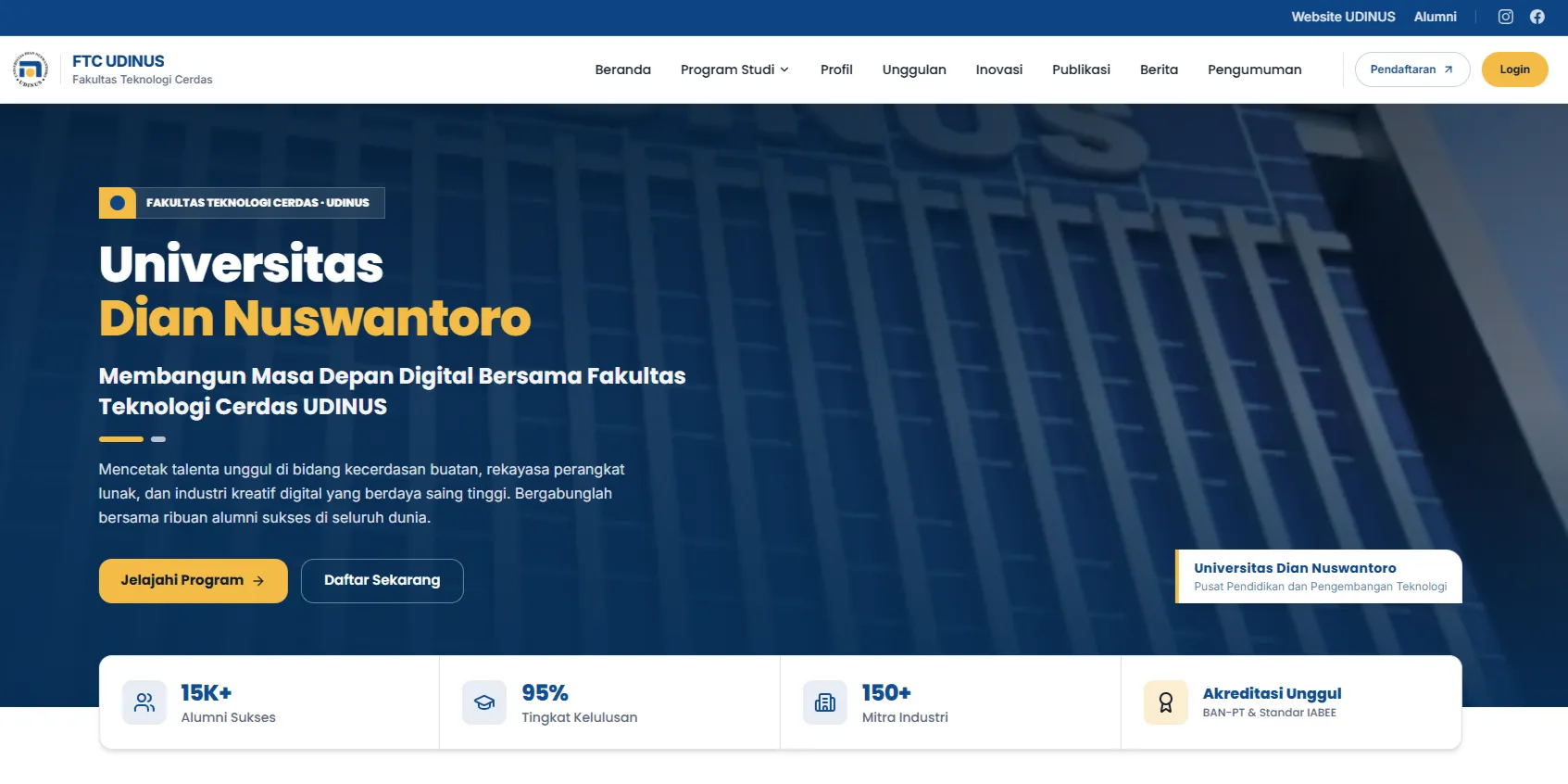
Live faculty landing page at ftc.dinus.ac.id, introducing FTC’s deep-navy and gold identity alongside institutional highlights and program navigation.
Dynamic Per-Program Architecture
Splitting responsibilities across two dedicated repositories kept both internal workflows and public sites fast and maintainable:
- Internal Sub-Apps & CMS: Kept on Next.js, React, TypeScript, Tailwind CSS, Radix/shadcn, SWR, TanStack Table, React Hook Form, Zod, and Tiptap, with legacy public landing routes cleanly removed.
- Public Faculty & Study-Program Websites: Rebuilt on Astro, Tailwind CSS v4, and selective React Islands, pulling live content from the CMS with minimal client-side JavaScript for fast loads and clean SEO.
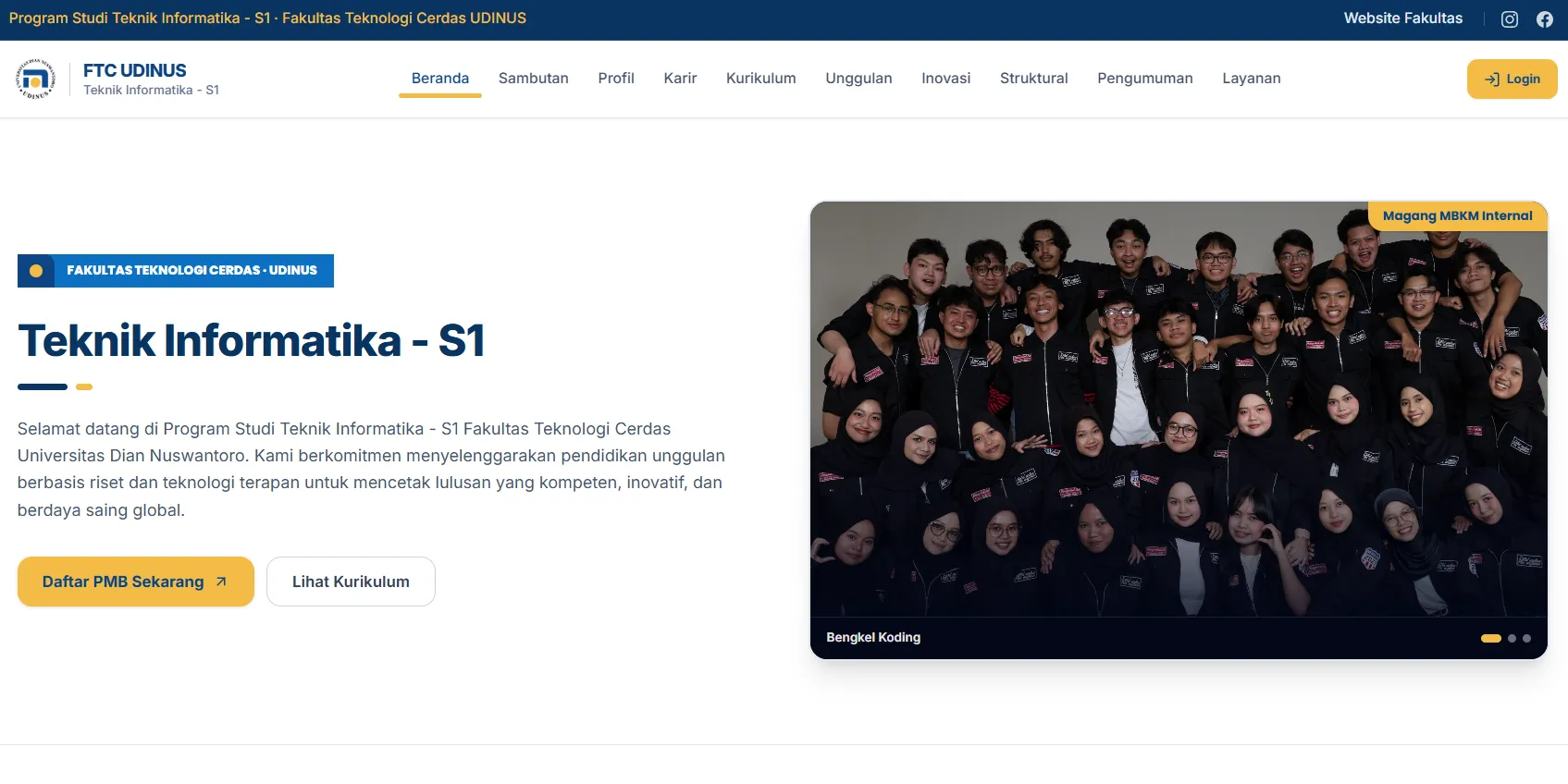
Live study-program landing page for Teknik Informatika - S1, powered by shared Astro templates and per-program CMS content so every department feels distinct while belonging unmistakably to FTC.
Reflection
Leading both visual redesigns and frontend implementation taught me to design at the system boundary: defining token rules, predictable layout invariants, and clean architectural splits so a multi-team platform can keep growing long after a single release ships.